


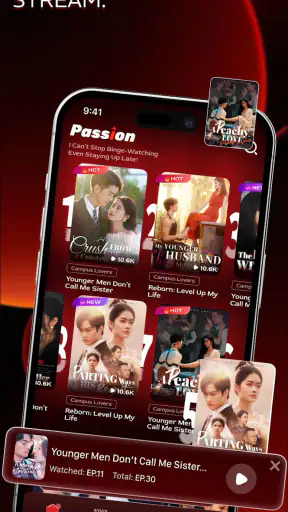

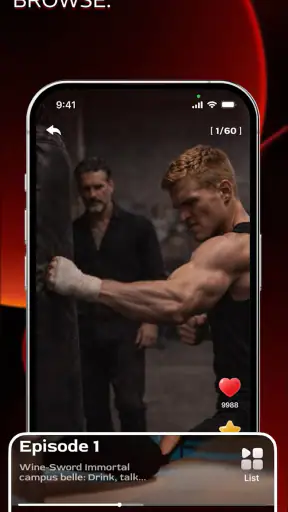
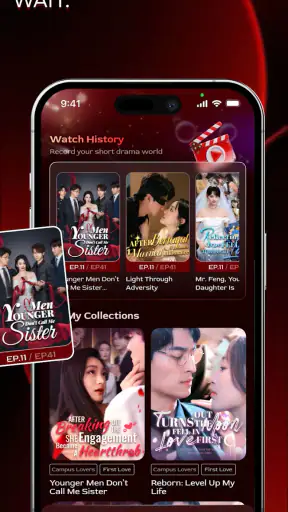
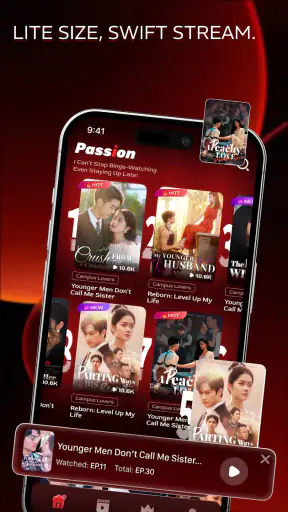

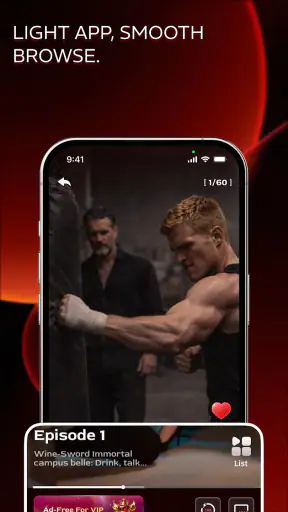
I approached Passion Drama Lite as something I might keep on a shared phone: a lighter entertainment app that should be quick to open when someone wants a short break, but still needs sensible boundaries when several people use the same device. Developed by medyem, it presents itself as a faster, less demanding way to access Passion Drama content. My overall impression is positive, especially for viewers who value convenience over a large set of advanced controls.
The app is free to install, which makes trying it straightforward. It is listed for Teen users, supports Android 7.0 and later, and its current version is 1.0.4. Those details matter in a household because an older spare phone may still be compatible, while the age label is a useful reminder that the app should not automatically be treated as suitable for every person who happens to share the device.
How it feels on a shared household device
The most convincing use case is a shared tablet or secondary phone used during quiet moments. Imagine one person watching a drama after dinner, another checking the same device later, and a child occasionally picking it up for something else. A lighter app can be more practical in that situation than a heavier entertainment platform that takes longer to launch or occupies more storage. Passion Drama Lite is built around that kind of quick access rather than making the experience feel like a complicated media center.
I would not treat it as a perfect family television replacement. Its appeal is more focused: open the app, find something to watch, and get into the entertainment without unnecessary weight. That simplicity is helpful when the device is not dedicated to one person. It also reduces the temptation to spend time adjusting settings before anyone can actually watch.
There is a trade-off, though. A lighter experience can mean fewer conveniences than a full-featured streaming alternative. If your household expects detailed profiles, extensive discovery tools, strong viewing controls, or carefully separated recommendations, this is not the kind of app I would choose without checking how well it fits those habits. The right question is not whether it is “better” than a larger service, but whether fast access is more valuable to you than a broader control system.
In my experience, shared-device apps work best when everyone agrees on a simple routine. One person should not assume that the app will automatically separate viewing preferences or protect every account boundary. I would use it as one part of a household setup, not as a substitute for talking about who uses the device and what kind of content is appropriate.
What the lighter approach changes in daily use
The main benefit becomes clear when the phone is older, has limited free space, or is already carrying messaging, photos, and work tools. A lighter entertainment app is less intimidating on such a device. It is also a reasonable choice for someone who does not want a large application designed around endless browsing. If the goal is simply to reach Passion Drama content with less friction, the Lite approach makes sense.
One useful habit is to treat the app as a planned viewing tool rather than leaving it open as background entertainment. On a shared device, that keeps the experience easier to coordinate and avoids confusion about who was watching what. I also prefer closing the app when handing the phone to another person. That small step helps maintain privacy and prevents the next user from immediately seeing the previous viewing context.
Another practical point is storage management. Even when an app is designed to be lighter, the device still needs room for the operating system, personal files, and other apps. I would avoid filling the phone with unnecessary downloads or duplicate media around it. Keeping the device tidy makes the promised quick-access idea more meaningful than installing it on a phone that is already struggling for space.
Setting boundaries before several people use it
Passion Drama Lite is rated Teen, so I would make the age context part of the setup conversation from the beginning. That does not mean every teenager will have the same viewing preferences, and it certainly does not mean younger children should use it without an adult deciding what is suitable. On a shared phone, the simplest safeguard is active supervision and a clear agreement about who may open the app.
I would also check which account, if any, is active before handing the device to another person. Shared phones create a common problem: one user assumes they are browsing privately, while another user later finds the same session open. The app should therefore be treated like any other entertainment service that may expose personal viewing activity or account information. Signing out when appropriate is a more reliable boundary than assuming that a Lite version changes account behavior.
This is especially important if the device belongs to an adult but is occasionally borrowed by a teenager. The adult should decide whether the app is available at all, and the teenager should know that the Teen classification is not a personal permission slip. I appreciate that the age label gives households a starting point for that discussion, but responsible use still depends on the people managing the device.
There is also a purchase boundary to consider. The app is free, but in-app purchases range from $0.99 to $99.99 per item. That is a significant difference between “free to try” and “nothing can be charged.” On a shared device, I would never leave payment access casually available to everyone. The person responsible for the account should review purchase authentication and make sure other users understand that tapping a purchase option can have real financial consequences.
This is one of the less obvious points about using a free entertainment app in a household: the installation decision and the spending decision are separate. I would be comfortable letting a family member test the free experience while still keeping purchases under the account holder’s control. That arrangement is more practical than banning the app simply because optional payments exist.
Keeping accounts and viewing habits separate
If more than one person uses the same phone, I recommend deciding in advance whether the app is for one account or several. A single shared account may be convenient, but it can blur personal preferences and make the viewing history less meaningful. Separate accounts, where supported by the service, may offer cleaner boundaries; if the household does not want to manage that complexity, using the app only for occasional shared viewing may be the better compromise.
I would also avoid saving passwords in a browser or password manager that every device user can open without restriction. That advice is not unique to this app, but it matters here because entertainment services are often treated casually. A shared screen can still contain private account details, and convenience should not quietly become open access.
For a household that wants strict child separation, detailed parental settings, or independent profiles for every viewer, I would compare Passion Drama Lite with a larger service that clearly centers those tools. The Lite format appears most attractive when speed and simplicity come first. It is less suitable when account organization is the main reason for choosing an entertainment platform.
Coordinating who watches and when
Coordination sounds minor until several people rely on one device. I found that the easiest approach is to treat the app like a shared television rather than a personal feed. Agree on whether the device is available for a full episode or only a short session, and return it to a neutral screen afterward. This avoids the awkward situation where someone picks up the phone expecting to use it for another task and finds a drama already playing.
The app’s faster-access positioning is useful for spontaneous viewing, but it can also encourage impulsive opening. In a family setting, I would keep the device in a common area during shared use. That makes it easier for an adult to answer questions about content and prevents the age label from being ignored simply because the app is easy to reach.
A realistic example would be a household with one Android tablet in the living room. One adult uses Passion Drama Lite after work, a teenager watches later, and the tablet is then returned for homework. The sensible workflow is to finish the session, close the app, check that no purchase screen is left open, and hand over the tablet only after confirming that personal account information is not exposed. None of those steps is difficult, but they are the difference between convenient sharing and avoidable confusion.
I would not rely on verbal coordination alone if the device is frequently passed around. A short written household rule can help: who may use the app, when it is acceptable, and whether purchases are allowed. That may sound formal for an entertainment app, yet it prevents the most common shared-device problems without requiring complicated technology.
There is another trade-off between Passion Drama Lite and a general video platform. A broad platform may be better for a group with very different tastes because it offers a wider range of content and discovery paths. Passion Drama Lite is more appealing when the household already knows what kind of drama content it wants and values a direct route to it. I would choose the focused option for clarity, and the broader alternative for variety.
When quick access is genuinely useful
I see the Lite format working particularly well on a commuter’s backup phone, a bedroom tablet, or a device that is shared only in the evening. In those situations, the user is not asking for a sprawling entertainment ecosystem. They want a dependable way to reach a specific kind of viewing without making the device feel overloaded.
It is less convincing for someone who wants to build a large personal library, carefully organize multiple viewers, or use one app as the central hub for every kind of video. Those users may be happier with a full service that offers deeper account management and broader content discovery, even if that means a heavier installation and a busier interface.
My practical tip is to test the app during the exact time and situation in which you expect to use it. Try it on the shared device, switch between the app and ordinary household tasks, and see whether the handoff feels comfortable. A lighter app can be excellent in theory but still inconvenient if your household needs features it does not emphasize.
Age, trust, and responsible access
The Teen classification should shape expectations without being treated as a complete safety system. I would explain to younger users that the label describes the intended age context, while an adult still decides whether the content and service are appropriate. This is particularly important when the app is installed on a device that children can reach freely.
Trust also includes financial trust. Because optional purchases can reach $99.99 per item, I would keep payment approval with the account owner. A teenager may be perfectly capable of choosing a show and still not be ready to authorize entertainment spending. Separating those responsibilities is a sensible household boundary.
Privacy deserves similar attention. If several people use one device, I would not assume that the app’s Lite branding means personal activity is hidden. I would inspect the active session before lending the phone, avoid leaving the account open unnecessarily, and make sure everyone understands that shared access can reveal more than intended. These are simple habits, but they protect trust better than vague assumptions.
For adults living alone, these concerns are much easier to manage. The app can remain a straightforward entertainment choice, and the free entry point makes it low-risk to try. For a family with younger children, guests, or frequent device sharing, I would spend more time on account and purchase boundaries before deciding whether it belongs on the main household tablet.
What the ratings and reach suggest
The app has a 4.8 average from around 49 thousand ratings and has passed one million installs. I see that as a strong sign that the basic idea is resonating with many users, especially those looking for a lighter route into this entertainment category. It does not prove that every household will find the account experience ideal, but it does make the app worth considering rather than dismissing as an untested niche.
The number of ratings also suggests that the app has found an audience beyond a handful of early adopters. Still, I would interpret popularity carefully. A high average can reflect satisfaction with quick access while saying little about how well the app handles a shared family device. That is why my recommendation depends on your priorities: convenient drama viewing is a stronger reason to install it than advanced household administration.
The developer, medyem, keeps the product identity focused around that lighter access idea. I would judge it on whether it stays comfortable on the devices and routines that matter to me, not on whether it tries to imitate every feature of a larger entertainment platform. A focused app can be more pleasant when it does one job clearly.
My household verdict
I recommend Passion Drama Lite to adults and older teens who want a free, focused entertainment app and are comfortable managing shared-device boundaries themselves. Its strongest qualities are the lighter approach, quick access, broad compatibility with Android 7.0 and later, and a clear fit for people who do not need a huge entertainment dashboard.
I would be more cautious about installing it on a device that younger children can use without supervision. The Teen rating and optional purchases mean that an adult should decide how access works. I would also skip it if your priority is a complete family media system with elaborate profiles, tight viewing separation, or a single place for many unrelated video services.
The app’s free price makes experimentation easy, but I would still review the purchase boundary before anyone else uses it. That one step prevents the most serious shared-device mistake. I would then establish a simple routine: use the app in an appropriate setting, keep accounts separate where possible, close the session after viewing, and return the device ready for the next person.
My final view is that this is a practical choice rather than an all-purpose one. Passion Drama Lite is at its best when fast, lighter access matters more than elaborate household controls. For a personal phone or a responsibly managed shared tablet, I can see the appeal. For a family seeking strict separation and extensive supervision tools, I would compare alternatives before settling on it.
With those expectations in place, I would feel comfortable recommending it to a friend who already enjoys Passion Drama content and wants a less demanding way to reach it. The app does not need to replace every entertainment option in the home. It only needs to make its particular kind of viewing easy, while the people sharing the device handle the boundaries thoughtfully.


